3 Self Soothing Techniques For Anxiety
The mind speaks to us in several ways. In many cases, it uses our body to relay information to us. For example, if you’re hurting, it might be that you’re putting too much stress on a certain part of your body.
The mind speaks to us in several ways, and one of the most important is through the body. Our physical sensations often communicate what our emotional system is carrying. For example, if you’re hurting, tense, or exhausted, it may be your nervous system signaling that you’re under too much stress or pressure.
With everything that has unfolded in the world over the past few years, people have been experiencing higher levels of chronic stress and anxiety than ever before. When left unaddressed, stress can impact sleep, digestion, immunity, hormones, and overall well-being. In many cases, the body becomes the first messenger that something needs attention.
Fortunately, there are simple practices that help us regulate the nervous system and support emotional balance. Self-soothing techniques are one way to calm an activated stress response and increase feelings of safety and grounding.
Often referred to as self-soothing behaviors, these techniques help you reduce anxiety, relax the body, and shift your emotional state. The right approach depends on personal preference, what works well for one person may not be the ideal tool for another. It’s helpful to try a few different methods and notice which ones create the most ease, calm, or relief.
Below are three self-soothing techniques that can help you regulate your emotions, reduce anxiety, and feel more grounded throughout the day.
Technique 1: Havening
The first technique is called havening, great for engaging a deeper brain wave state. Every human has four types of brain wave states, including:
Beta: The state or awareness.
Alpha: Commonly called daydreaming.
Theta: A deeper state.
Delta: The deepest, relaxed state.
The havening touch technique generates delta brain waves, the ultimate state of relaxation. When you touch your body, you engage your senses and brain waves more. Certain parts of your body are better at engaging brain waves than others. The three parts of your body that are best at engaging your brain waves are your:
Hands
Face
Arms
Before starting the havening touch technique, rate how you’re feeling on a scale of one to 10 (one is feeling calm and 10 is very stressed). Next, pick either your hands, face, or arms and start gently rubbing them.
As you rub this part of your body, take deep breaths in and out. You might also consider saying some positive affirmations, like telling yourself you’re going to have a good day. Touching all three parts will help you find the one that is most soothing, allowing you to get the best results.
Technique 2: EFT Tapping
The second technique is called EFT tapping and involves the light tapping of specific parts of your body. The human body has nine meridian points, including:
Top of the head
Above the eyebrows
Outside the eyes
Below the eyes
Above the upper lip
In the chin
On the collarbone
Just outside the breastbone
Outside of the hand
For this method, you’ll use either one or two fingers to tap, depending on the part of the body. Most people use one finger for facial taps and two fingers for the other parts of the body. The EFT tapping technique involves tapping each meridian point five to seven times.
There is no specific order in which you need to tap to get results and you can use one area more than others if it makes you more comfortable. The quickest version is around the eyes and the collarbone.
You might not immediately feel an impact of the tapping and it could take multiple rounds before you see results. Additionally, you might begin to experience emotional releases. This is normal and is the result of moving through your emotions.
Like other techniques, you should give yourself positive affirmations while tapping. This can include saying that your emotions or thoughts are acceptable and that you’ll get through whatever is causing you distress.
Technique 3: The Butterfly Hug
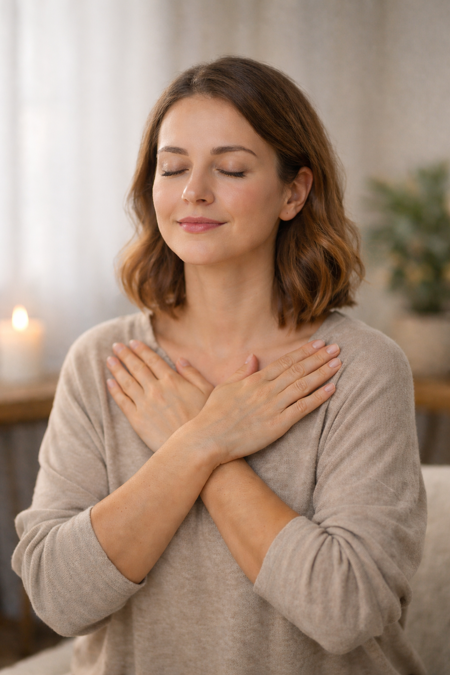
The Butterfly Hug is one of the most popular self-soothing techniques and is frequently used in somatic therapies and EMDR. It combines gentle tapping with supportive touch to help calm the nervous system and create a sense of safety in the body.
To begin, place one hand over the other and hook your thumbs together. Rotate your hands outward to form a butterfly or a “W” shape, then rest your hands on your collarbone.
With your eyes closed and your breath slow and steady, begin tapping your collarbone with your fingertips. You can tap with one finger or several—whatever feels comfortable. You can tap more slowly or more quickly, depending on what feels soothing to your system.
One of the benefits of these self-soothing methods is how accessible they are. They can be done almost anywhere—at your desk, in the car (while parked), in bed, or in a stressful environment—and they only take a few moments to begin shifting your emotional state. They’re subtle, grounding, and supportive for both anxiety and emotional overwhelm.
Self-soothing techniques are just one way to regulate stress and support a balanced nervous system. If you notice recurring patterns of anxiety, sadness, anger, or emotional overload, it may be a sign that your body is asking for deeper support. Hypnotherapy and somatic tools can help reduce stress at the subconscious level, break old patterns, and create new emotional responses rooted in safety and resilience.
If you’re curious whether this work could support you, you can schedule a consultation call here. I’ll help you understand what’s happening beneath the surface, explore what’s possible, and see if it’s a good fit for you.